
Psoriasis
Psoriasis is a chronic skin condition that affects between 2% and 3% of the UK's population. Psoriasis is a chronic inflammatory condition typified by red, scaly patches of skin, and can significantly impact a person's quality of life.
Book an appointmentWhat is psoriasis?
Psoriasis is a chronic skin condition that causes rapid skin cell growth, leading to the build up of cells on the skin's surface. These extra skin cells form scales and red patches that are often itchy and sometimes painful. Psoriasis is a long-term condition with periods of remission and flare-ups.
What causes psoriasis?
Although the exact cause of psoriasis is unknown, there are several factors that could increase the risk of getting psoriasis:
Genetics
Psoriasis tends to run in families, indicating a genetic predisposition to the condition.
Overactive immune system
An overactive immune system can mistakenly attack healthy skin cells, causing rapid skin cell turnover.
Environmental triggers
Factors such as trauma to the skin and certain medications can trigger or exacerbate psoriasis.
Lifestyle factors
Obesity, diet, smoking, heavy alcohol consumption, and stress can influence the severity of psoriasis or lead to disease flares.
Types of psoriasis
There are several forms of psoriasis, and each has its own characteristics:
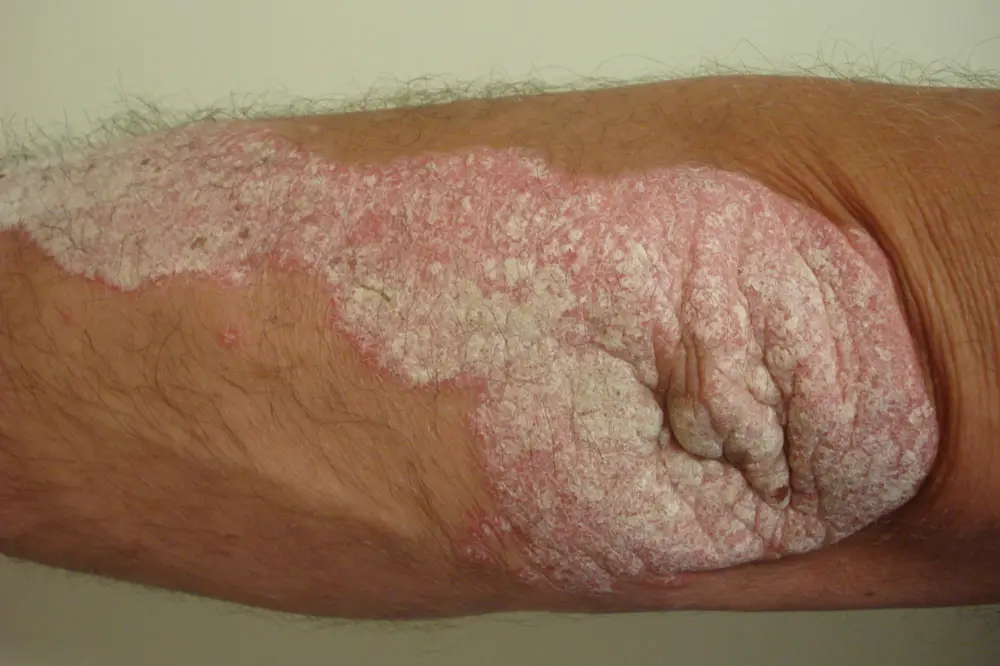
Plaque psoriasis
Plaque psoriasis is the most common form. It is characterised by red, raised patches covered with a silvery-white scale. Elbows and knees are very common sites. The scalp is often involved.
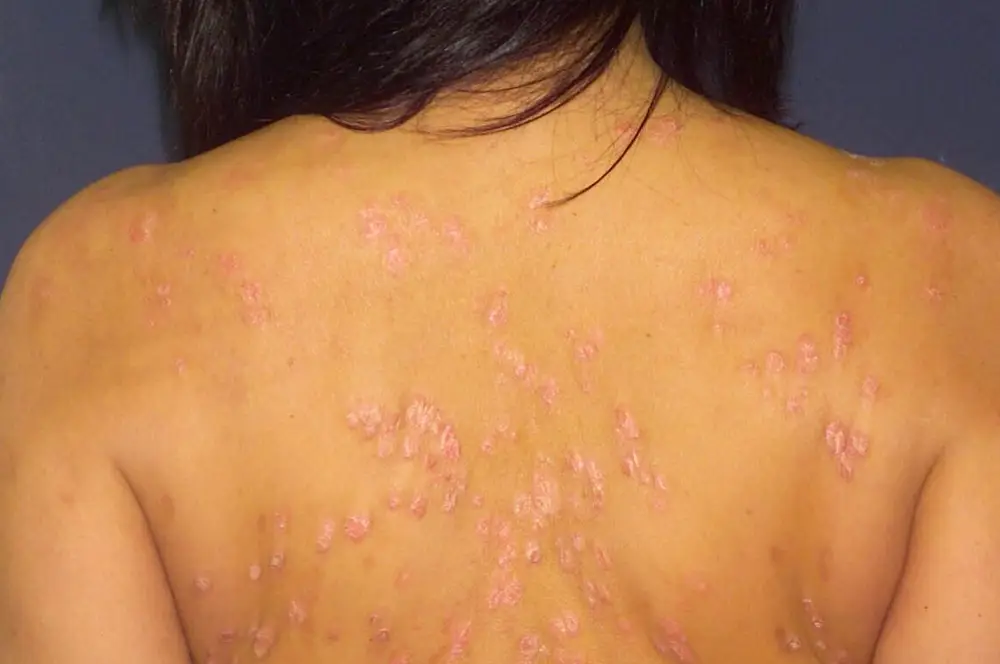
Guttate psoriasis
Guttate psoriasis refers to more widespread "rain drop" like lesions. This often starts in childhood or young adulthood and can be triggered by a bacterial infection such as streptococcal sore throat. This often involves the trunk but this pattern can occur anywhere.
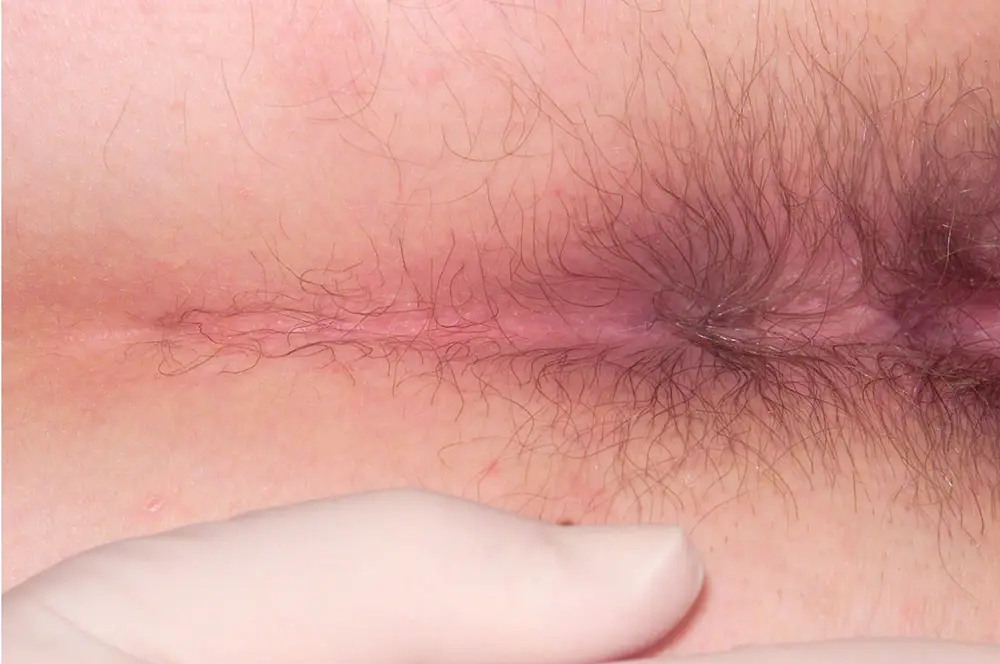
Inverse psoriasis
Inverse psoriasis, also known as flexural psoriasis, causes bright "beefy" red patches that appear in skin folds – such as the armpits, groin, and under the breasts. There is an absence of scale but usually a very clear cut off between affected and normal skin.
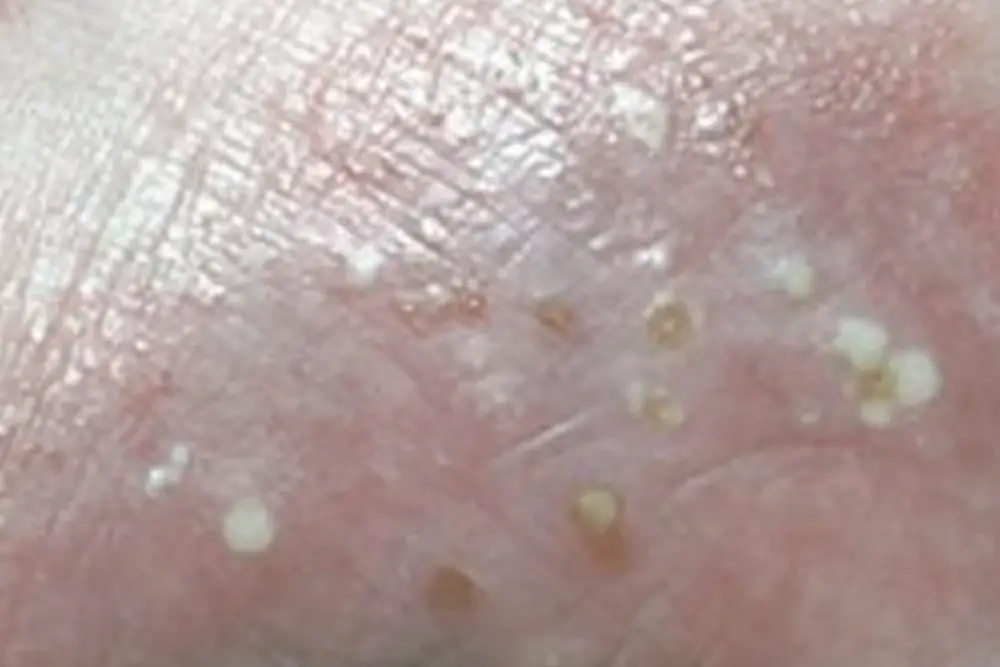
Pustular psoriasis
Pustular psoriasis results in white pustules (blisters of non-infectious pus) surrounded by red skin.
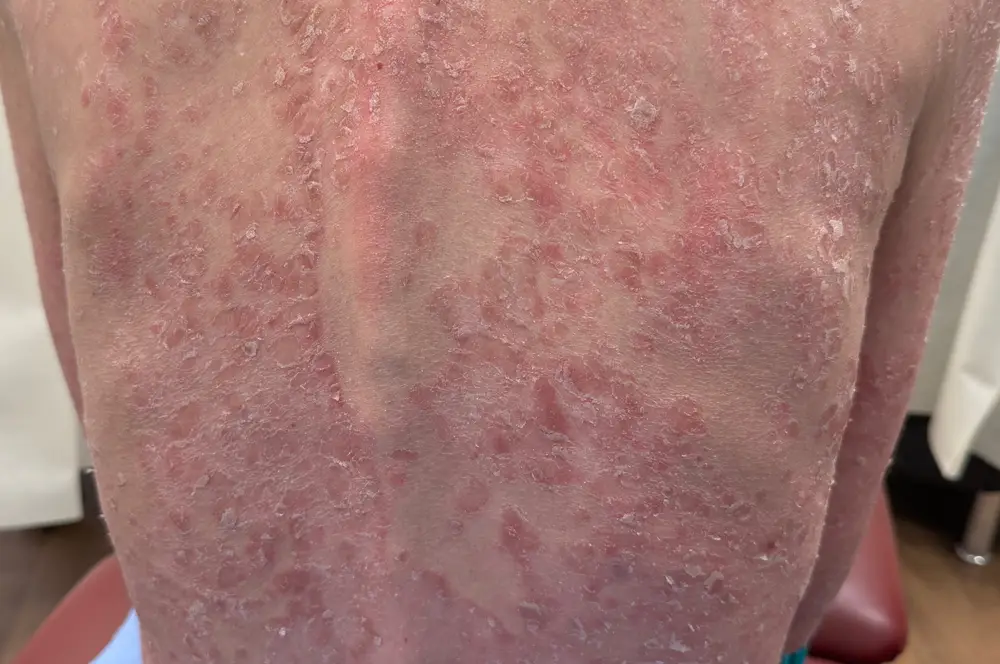
Erythrodermic psoriasis
Erythrodermic psoriasis is a severe, rare form of psoriasis that leads to widespread redness over the majority of the body. Erythrodermic psoriasis can lead to water loss through the skin, problems with temperature regulation, swelling of the limbs and sometimes impacts on kidney function or can lead to a medical emergency.
What are the symptoms of psoriasis?
The symptoms of psoriasis can vary depending on the type and severity, but common signs include:
- Red patches: Inflamed, red areas of skin are common. These are often covered with silvery scales.
- Dry and cracked skin: Skin may become dry and cracked, which may bleed or itch.
- Itching: Significant discomfort can come from the itching. This can affect sleep and daily activities.
- Thickened nails: Thickened nails with pitting, ridges, or separation from the nail bed can occur as a result of psoriasis.
- Joint pain: Psoriatic arthritis can occur in up to 30% of individuals with psoriasis. This can lead to joint pain and swelling.
How to treat psoriasis
There is no cure for psoriasis, but various treatments have been proven to help manage the symptoms and improve individual quality of life:
Topical treatments
Topical treatments can reduce the symptoms of psoriasis and give relief to those suffering. Common treatments include:
- Corticosteroids: Reduces inflammation and relieves itching.
- Vitamin D analogues: Helps slow skin cell growth.
- Calcineurin Inhibitors: Reduces inflammation and plaque build up.
Phototherapy
Phototherapy can also be an effective treatment:
- UVB Therapy: Exposure to ultraviolet B light.
- PUVA Therapy: Combination of UVA light and the drug psoralen.
Systemic medications
Systemic medications have proven to be an effective treatment in some patients. These include:
- Methotrexate: Slows cell growth and suppresses inflammation. Find out more about this treatment.
- Ciclosporin: Suppresses the immune system. Find out more about Ciclosporin.
- Biologic Drugs: Targets specific parts of the immune system, such as TNF-alpha inhibitors, interleukin inhibitors, and T-cell inhibitors.
Lifestyle Changes
Lifestyle changes can cause psoriasis flare-ups, so managing these can help, such as:
- Diet: Maintaining a healthy diet can help manage weight and reduce flare-ups.
- Stress management: Techniques such as meditation, yoga, and exercise can help reduce stress-related flare-ups.
- Avoiding triggers: Identifying and avoiding triggers, such as certain foods, alcohol, and smoking can help to reduce symptoms.
How to prevent psoriasis
You cannot prevent psoriasis. However, you can manage the symptoms with both treatment and lifestyle adjustments to help prevent flare-ups:
- Regular skincare: Using moisturisers to keep skin hydrated and reducing scaling can help to reduce symptoms.
- Healthy lifestyle: Maintaining a balanced diet, exercising regularly, and avoiding smoking and excessive alcohol consumption can keep symptoms of psoriasis at bay.
- Stress reduction: Practising stress-relieving techniques can manage symptoms.
- Monitoring triggers: Keeping a list or a diary to track triggers and avoiding them where possible can help stop psoriasis flare-ups.
- Regular check-ups: Regular consultations with a dermatologist to monitor the condition and adjusting treatment as necessary is important for long-term care.
Important information
When should I see a dermatologist for my psoriasis?
It's important to seek professional advice if you notice significant changes in your skin condition or your symptoms worsen or do not improve with over-the-counter treatments. It's also a good idea to contact a dermatologist if your psoriasis is causing significant discomfort or interfering with daily activities or if you notice joint pain, as this may indicate psoriatic arthritis.
What's the first step to treating psoriasis?
The first step is to book a consultation with one of our experts. From there we will assess your skin, and potentially diagnose you with psoriasis if you haven't sought out help before.
We take the time to understand your lifestyle, looking for potential triggers, before noting down your previous medical history, medications you are currently taking, and discussing any other treatments you have tried. Our experts will then recommend the best course of treatment for you.
While psoriasis is a chronic and often distressing skin condition that cannot be cured, with the right understanding and treatment, those suffering can effectively control psoriasis symptoms and minimise the impact on their lives.
Get in touch with our team today to discuss your psoriasis treatment.
We treat patients with all types of psoriasis
At Experts in Skin and Hair, we have many years of experience treating patients with psoriasis. We understand how skin psoriasis can impact your life and take steps to help you manage psoriasis symptoms and reduce the impact on your life.
We will spend time analysing your skin and understanding your lifestyle, in order to suggest the best treatment for you.