
Skin Biopsy
Skin biopsies are vital for diagnosing a wide range of skin conditions, allowing us to provide expert treatment plans to follow up with.
Book an appointmentAccreditations & memberships
Our consultants are members of leading UK and international dermatology and hair specialist bodies.

- Royal College of Physicians
- European Hair Research Society (EHRS)
- British Association of Dermatologists
- British Hair & Nail Society
- American Academy of Dermatology Association (AAD)
- European Academy of Dermatology & Venereology (EADV)
What is a skin biopsy?
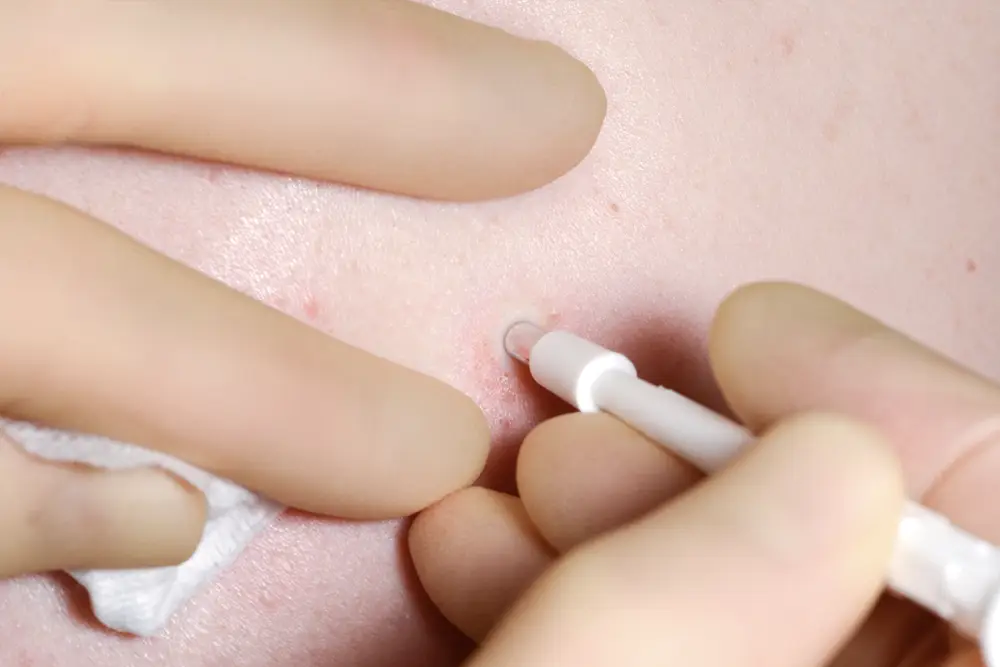
A skin biopsy is a minor surgical procedure in which we remove a small core sample of skin for examination under a microscope to diagnose skin conditions. This allows us to examine the tissue and can identify various conditions affecting your skin.
When is a skin biopsy needed?
Conducting a skin biopsy allows us to precisely diagnose a variety of skin conditions, helping to identify issues like skin cancer, infections, or inflammatory skin disorders early on.
This early detection through biopsy allows for prompt treatment, improving outcomes and preventing any potential complications. The procedure also allows us to assess the nature of unusual growths or rashes that may not be identifiable through visual examination alone.
If a skin condition lacks typical diagnostic features, a skin biopsy is often the most useful and accurate way we can diagnose a skin condition.
Common skin conditions we diagnose through skin biopsies
A skin biopsy can help identify a variety of skin conditions and issues, including:
Skin cancer
Such as melanoma, basal cell carcinoma, squamous cell carcinoma.
Benign growths
Such as moles, warts, or lesions.
Inflammatory conditions
Such as psoriasis or eczema.
Infections
Identifying bacterial, viral, or fungal infections of the skin.
Skin rashes
Such as dermatitis when the cause is unclear.
Precancerous changes
Detecting abnormal cells before they become cancerous.
Autoimmune disorders
Identifying conditions where the immune system attacks the skin.
Pigmentation disorders
Such as melasma or other pigment abnormalities.
Scarring conditions
Assessing abnormal healing or keloid formation.
What are the different types of skin biopsies?
There are several types of skin biopsies we conduct, each suited to different skin conditions and areas of concern. The type we choose will be based on the area's location on the body, its size, and the suspected condition. The most common types include:
Shave Biopsy
We shave off a small section of the outer layers of skin using a ring curette, scalpel or a flexible razor blade. We will use this type for raised or superficial growths.
Punch Biopsy
We remove a cylindrical piece of the skin using a specialised tool called a punch device, which cuts through all layers of the skin. We will use this type for deeper skin samples, such as when diagnosing rashes or inflammatory skin conditions.
Excisional Biopsy
We remove a full section of skin using a scalpel, including deeper layers. We will use this type for larger or suspected malignant growths, and the wound is stitched up afterward.
Incisional Biopsy
We remove a portion of a lesion to examine later, often used when the lesion is too large to remove entirely. We will use this type for tumours or large growths.
Our skin biopsy process
Here's a general overview of our skin biopsy procedure:
Initial consultation
We will first discuss your concerns during the initial consultation, assessing the area of concern and determine the best type of biopsy for your condition. We will also give you instructions on how to prepare and what to expect.
Preparing for the biopsy
At a second meeting, we will conduct the biopsy. Before the biopsy begins, we will inject local anaesthetic to numb the area. This ensures that you remain comfortable and pain-free during the procedure.
The biopsy
Next, we will move forward with the procedure. This will differ depending on the biopsy we have chosen, however all will involve removing a sample of tissue from your skin.
Wound care
After the biopsy is complete, we will clean and cover the wound. If stitches are necessary (common in excisional biopsies), they will be placed to help the skin heal.
Results and follow-up
Once we have examined the results in the lab, we will schedule a follow-up appointment to discuss the results and next steps.
Aftercare
After a skin biopsy, we recommend following these tips to ensure the wound heals and minimise the risk of infection:
- •Keep the area clean and dry
- •Apply any recommended ointments
- •Keep the wound covered with fresh dressings
- •Avoid scratching or picking the wound
- •Avoid sun exposure
- •Limit physical activity and sweating
- •Keep an eye on stitches (if applicable)
- •Avoid tight clothing over the affected area