
Folliculitis
Folliculitis is an inflammation or infection of hair follicles in the skin, generally affecting one general area of the skin.
What is folliculitis?
Folliculitis is a common condition where hair follicles become inflamed or infected. It appears as small red or pus-filled bumps around hairs, often resembling acne, and can be itchy, tender or sore. Folliculitis can occur anywhere on the body where hair grows, and while it's usually mild, it can sometimes lead to more severe infections or scarring if left untreated.
What causes folliculitis?
Folliculitis is caused by the infection or inflammation of hair follicles, which can result from:
General symptoms
Bumps
Small, red, or pus-filled bumps that develop around hair follicles
Itching
The affected area may be itchy, sore, or tender to the touch
Swelling
Mild swelling or inflammation around the hair follicles
Discomfort
The affected area can be painful, especially if the infection is deeper or more severe
Clusters
The bumps may appear in clusters, often resembling a rash or acne breakout
Types of folliculitis
Sycosis barbae
Sycosis barbae or pseudofolliculitis barbae is a chronic folliculitis that affects the beard area, often caused by ingrowing hairs, irritation of the wall of the hair follicle and skin and then secondary bacterial infection. It may in part be related to shaving practice and shaving related irritation. It leads to red, inflamed, and sometimes painful bumps that can result in scarring or hair loss if untreated.
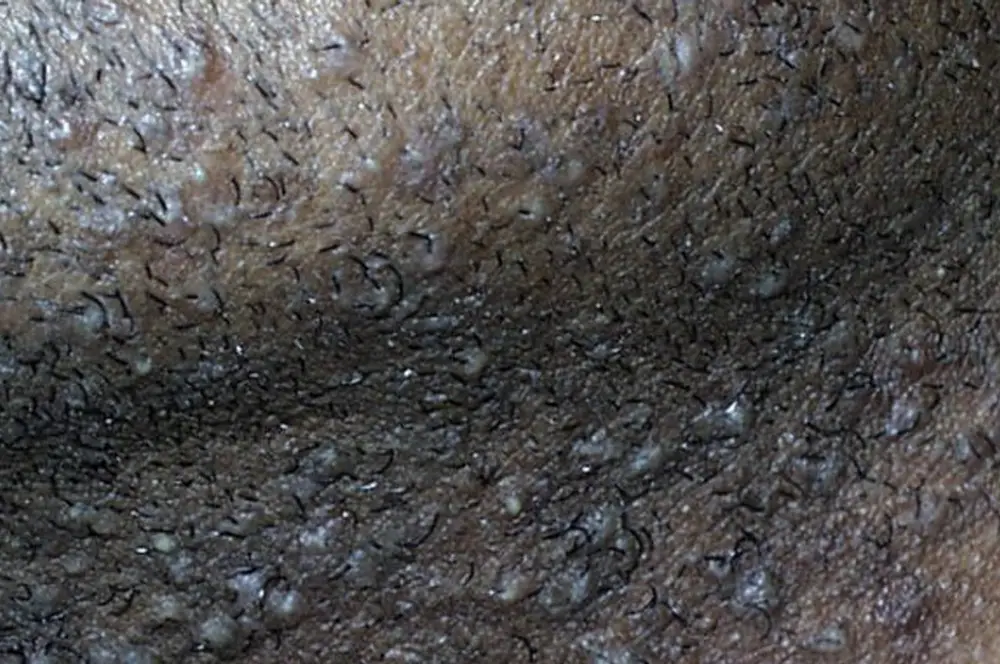
Hot tub folliculitis
Hot tub folliculitis is caused by bacteria after exposure to contaminated water in bodies of water such as pools or hot tubs. It presents as red, itchy bumps that appear within a few days of exposure and usually resolves on its own.
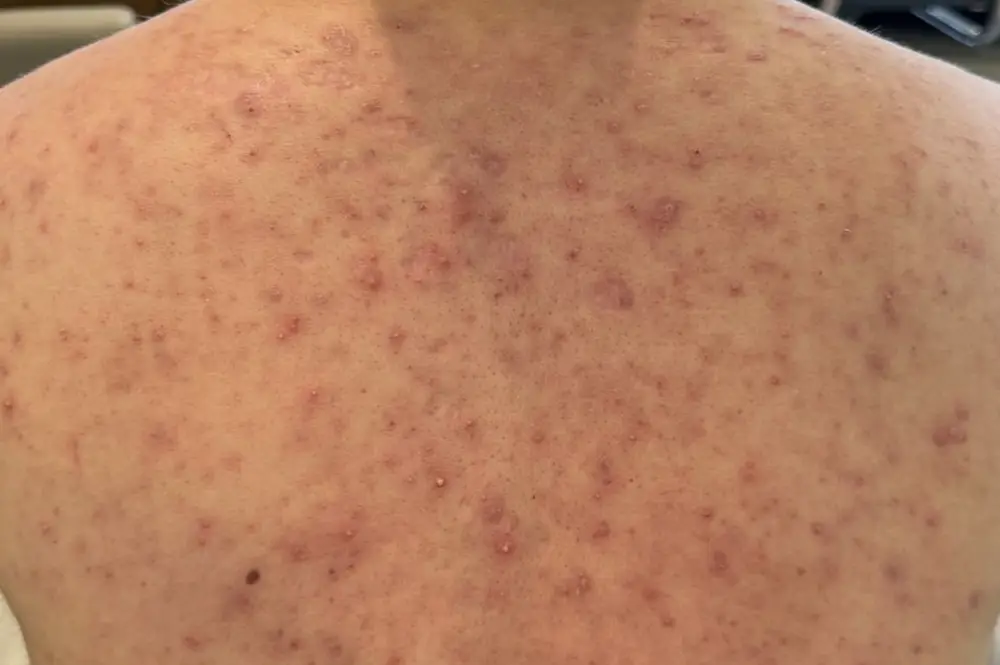
Gram-negative folliculitis
Gram-negative folliculitis can occur after prolonged antibiotic use for acne, leading to an overgrowth of gram-negative bacteria. It resembles acne but may not respond to typical treatments.
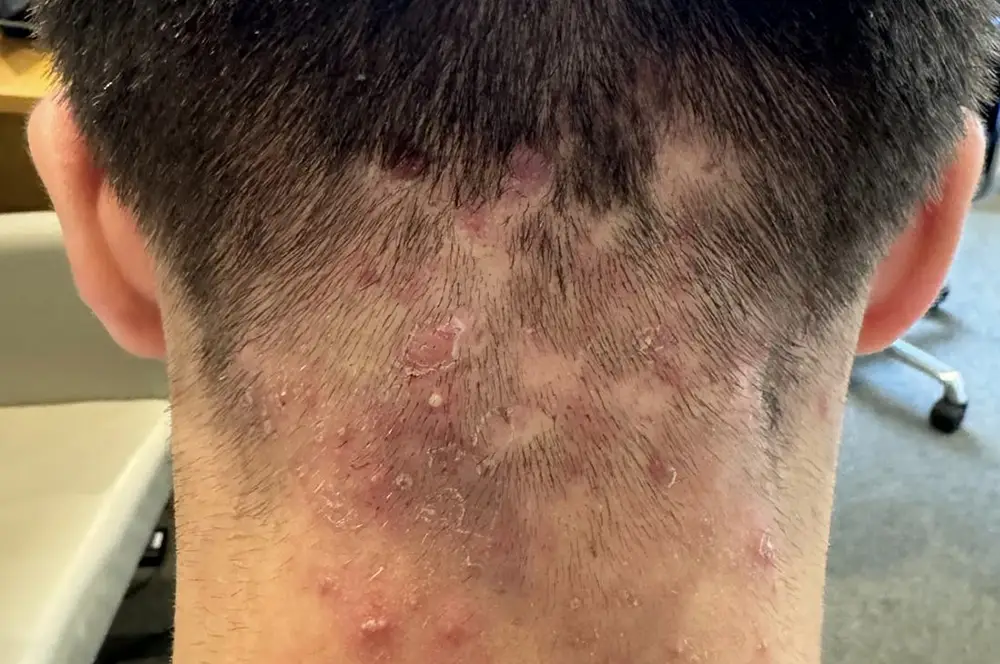
How to treat folliculitis
You can treat folliculitis in several ways. However, not all these methods may work for a specific case and it is likely you will need a combination of them to work. We will always advise on the best treatment option during a consultation with you.
How to prevent folliculitis
To give yourself the best defence against potentially contracting folliculitis, follow these steps:
Important information
When should I see a dermatologist about folliculitis?
You should see a dermatologist about folliculitis if the condition persists for more than a few days, worsens, or spreads despite home treatments. Also, seek professional help if the affected area becomes increasingly painful, swollen, or shows signs of infection-like pus, or if you experience recurring episodes.
What's the first steps for dealing with folliculitis?
The first step is to book a consultation with one of our experts. From there, we will assess your hair and scalp, reviewing the pattern and severity of your condition, as well as any underlying scalp conditions. We will also consider your medical history, current medications, and any prior treatments you've undergone. Our team will then recommend the most effective treatment tailored to your needs, along with an aftercare plan aimed at promoting hair regrowth and improving overall scalp health.
Folliculitis FAQs
We strive to provide you with advice and options to regain confidence in your hair. By implementing the appropriate measures, you can achieve significant improvements in hair growth and overall hair health.
Accreditations & memberships
Our consultants are members of leading UK and international dermatology and hair specialist bodies.

- Royal College of Physicians
- European Hair Research Society (EHRS)
- British Association of Dermatologists
- British Hair & Nail Society
- American Academy of Dermatology Association (AAD)
- European Academy of Dermatology & Venereology (EADV)