
Scarring Hair Loss
Scarring hair loss occurs when inflammation destroys hair follicles, leading to permanent hair loss. Explore the causes, symptoms, and treatment options for this condition to help manage and potentially mitigate its effects.
What is scarring hair loss?
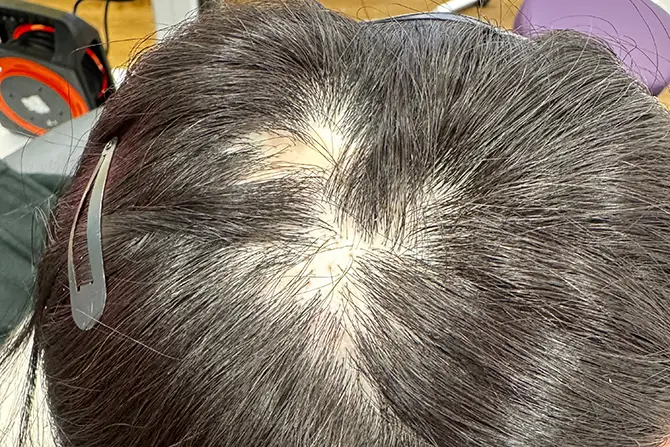
Scarring hair loss is a condition where inflammation permanently destroys hair follicles, leading to irreversible hair loss. The damaged follicles are replaced by scar tissue, preventing new hair growth in the affected areas. It is also known as cicatricial alopecia or scarring alopecia.
What causes scarring hair loss?
Scarring hair loss is caused by various conditions that lead to inflammation and damage of hair follicles, including:
General symptoms
Types of scarring hair loss
There are two main types of scarring hair loss:
Primary scarring alopecia
Primary scarring hair loss is caused by your body directly targeting and destroying hair follicles. This can be due to inflammation or autoimmune disorders. The most common form is frontal fibrosing alopecia.
Lichen planopilaris
Secondary scarring alopecia
Secondary scarring hair loss is caused by damage to the skin, which also leads to destruction of the hair follicles. This can be due to burns, infections, or radiation – for example.
Treating scarring hair loss
Treating scarring hair loss involves addressing the underlying cause and managing inflammation. These treatments will have varying results that depend on the severity of your condition and other factors.
Medications
We may prescribe immunosuppressants or other anti-inflammatory drugs to reduce inflammation and prevent further damage.
Topical treatments
Anti-inflammatory lotions, gels and creams can be used to treat local inflammation and deal with symptoms like itch.
Hair growth stimulants
Drugs like minoxidil can sometimes help stimulate hair growth in surrounding areas and disguise the loss in scarred areas. This is a common treatment plan for many cases.
Physical therapies
Treatments like Platelet Rich Plasma, microneedling, Tricopat, low level laser or UV light can be considered in the treatment of scarring alopecias.
You should always consult a dermatologist for a tailored treatment plan to help combat scarring hair loss.
How to prevent scarring hair loss
You cannot prevent scarring hair loss. However, early treatment can help alleviate symptoms and stabilise the condition and potentially prevent further loss.
Important information
When should I see a dermatologist for scarring hair loss?
You should contact us if you are concerned with any features that may represent scarring hair loss. These include localised areas of hair loss with altered scalp texture, inflammation, redness, itch or discomfort. You should contact a dermatologist as soon as possible as this will minimise any long-term effects of the condition.
What's the first step to treating scarring hair loss?
The first step is to book a consultation with one of our experts. From there, we will assess your hair and scalp, reviewing the pattern and severity of your scarring, as well as any underlying scalp conditions. We will also consider your medical history, current medications, and any prior treatments you've undergone. Our team will then recommend the most effective treatment tailored to your needs, along with an aftercare plan aimed at promoting hair regrowth and improving overall scalp health.
Scarring hair loss FAQs
We strive to provide you with advice and options to regain confidence in your hair. By implementing the appropriate measures, you can achieve significant improvements in hair growth and overall hair health.
Accreditations & memberships
Our consultants are members of leading UK and international dermatology and hair specialist bodies.

- Royal College of Physicians
- European Hair Research Society (EHRS)
- British Association of Dermatologists
- British Hair & Nail Society
- American Academy of Dermatology Association (AAD)
- European Academy of Dermatology & Venereology (EADV)