
Mole Removal
Whilst most moles are harmless, we offer safe and straightforward mole removal procedures designed to remove unwanted or suspicious moles from your skin.
Book an appointmentAccreditations & memberships
Our consultants are members of leading UK and international dermatology and hair specialist bodies.

- Royal College of Physicians
- European Hair Research Society (EHRS)
- British Association of Dermatologists
- British Hair & Nail Society
- American Academy of Dermatology Association (AAD)
- European Academy of Dermatology & Venereology (EADV)
What is mole removal?
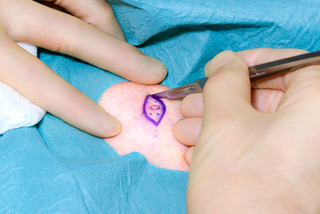
Mole removal is a procedure in which we remove a mole from the skin to get rid of an annoying mole or test a potentially harmful one. Mole removal is typically a quick procedure performed under local anaesthesia.
Why remove a mole?
Most moles do not require treatment. However, you may be unhappy with how it looks or feels on the skin or it may catch or irritate. Typically, we will suggest removing a mole if there is a health concern or if this is causing a problem for you.
Moles we suggest removal usually have atypical or suspicious features, are precancerous or cancerous. If a mole shows signs of abnormal changes—such as asymmetry, irregular borders, multiple colours, an increase in size, or if it becomes painful, itchy, or starts to bleed—we may recommend removal to test for skin cancer.
Removing the mole early allows us to examine and treat quickly, which can prevent the spread of skin cancer.
How do you remove moles?
There are a number of different methods we use to remove a mole from your skin. Typically, we opt to perform a biopsy, which include:
Shave biopsy
We use a small blade to shave off the mole. This method is used for raised or superficial moles that don't require deep tissue removal. It usually doesn't require stitches and heals quickly, though a small scar may remain.
Punch biopsy
This involves using a circular tool to remove a cylindrical section of skin, including deeper layers of the dermis. This method is used for moles or lesions that need a more thorough tissue sample. Punch biopsies often require a couple of stitches to close the wound and may leave a small scar.
Excisional biopsy
We remove the entire mole, along with a margin of surrounding skin. This is commonly done for larger moles or ones that have a higher suspicion of being cancerous. Stitches are typically needed to close the wound, and it results in a more noticeable scar but provides the most comprehensive tissue sample for analysis.
The advantages and disadvantages of mole removal
Removing a suspicious mole has several advantages. First, it allows for early detection and treatment if the mole is found to be cancerous. This is crucial, as early diagnosis of skin cancers, particularly melanoma, significantly improves treatment outcomes. Additionally, removing the mole can prevent the cancer from spreading to other areas of the skin or body, and it provides peace of mind by confirming whether the mole poses a health risk.
There are some disadvantages to consider. Mole removal can leave a scar, with the size and visibility depending on the depth and size of the mole. There's also a small risk of infection at the removal site, though this can be minimised with proper aftercare. Removing a mole also doesn't necessarily mean it will not grow back either.
However, in nearly all cases, the advantages of removing a mole will outweigh the risks.
What happens after the mole is removed?
All moles that have suspicious clinical features will be sent off for testing. After the removal, you'll typically receive your results within a couple of weeks. We will arrange a follow-up appointment to discuss the findings with you. If the biopsy indicates that the mole is benign, you may not need any further action.
However, if the results show abnormal or cancerous cells, we will explain the diagnosis and discuss potential next steps. This will likely include additional treatments and further monitoring.
We will always discuss your findings with you and plan the best way forward.
How much does it cost to remove a mole?
The cost of mole removal varies depending on the type of procedure, the equipment and time required and whether the mole needs to be sent off for formal histological testing. Our mole removal services start from £325 for a shave excision without histology. This includes hospital fees.
Having a mole sent away and tested understandably increases the cost and we will discuss this with you and provide you with a quote at the time of the initial consultation that covers all of the procedure related costs. Follow up fees are generally charged separately if it is necessary for you to return in person to discuss the results. This typically applies when the mole is suspected as being cancerous.